
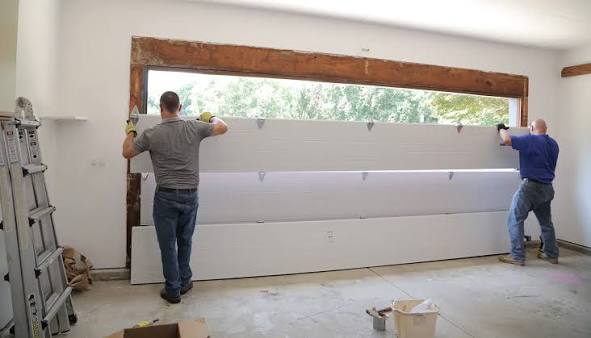
Installing a garage door is one of the larger home improvement projects a Miami homeowner can take on. Done right, it improves curb appeal, tightens energy efficiency, and adds a layer of security that matters in South Florida’s storm-prone climate. Done wrong, it creates alignment problems, premature wear, and safety risks that cost more to fix than the original installation.
This guide walks you through how to install a garage door from measuring the opening to making final adjustments, with Miami-specific considerations built in at every stage. Whether you are replacing an aging door or starting fresh, this is what you need to know before you pick up a tool.
Before You Start: What to Know About Garage Door Installation in Miami
Garage doors are among the heaviest moving components in a home, typically ranging from 150 to 300 pounds for a standard residential sectional door. The springs that counterbalance that weight store an enormous amount of tension. Incorrect spring installation is one of the leading causes of serious DIY injury in home improvement.
Miami-Dade County also enforces specific wind load requirements for garage doors. Since Hurricane Andrew, the county has required garage doors to meet or exceed wind resistance ratings for the local wind zone. Any replacement door must carry the appropriate Miami-Dade Notice of Acceptance (NOA) approval or it will fail inspection and may void your homeowner’s insurance coverage.
With those two factors in mind, this guide is written to be practical and complete. Spring installation and track tensioning sections include clear warnings about where professional help is the smarter call.
How to Measure a Garage Door Opening
Accurate measurement is the foundation of the entire project. A half-inch error in either direction creates alignment problems that show up the first time you operate the door.
Measure the width at three points: the left side, center, and right side of the opening at floor level. Use the smallest of the three measurements when ordering your door.
Measure the height on both the left and right sides of the opening. Again, use the smaller number.
Measure the headroom, the space between the top of the opening and the ceiling. Standard sectional doors need a minimum of 10 to 12 inches of headroom for the horizontal track and spring hardware. Low-headroom hardware kits are available if your garage ceiling is tight.
Measure the sideroom, the clearance on each side of the opening along the wall. You need at least 3.75 inches on each side for standard vertical track installation.
Measure the backroom, the depth of the garage from the opening to the back wall. You need enough depth to accommodate the door panels when fully open, typically the door height plus 18 inches.
Write all measurements down before ordering. Standard residential door sizes in Miami run 8×7, 9×7, 16×7, and 18×7, but confirm your exact opening before selecting a size.
Choosing the Right Garage Door for Miami’s Climate
South Florida’s environment narrows your material options more than most homeowners expect.
Steel doors are the most practical choice for Miami. They resist humidity, do not warp or rot in the heat, and most manufacturers offer insulated steel doors that meet Miami-Dade wind load standards. Insulated steel doors with a polyurethane core also reduce heat transfer into the garage, which matters when your air-conditioned home shares a wall with an un-air-conditioned garage.
Aluminum doors handle salt air better than steel and are a solid option for homes within a mile or two of the coast. They are lighter, which reduces spring and opener wear over time.
Wood doors are not recommended for Miami. The combination of year-round heat, humidity, and frequent rain causes warping, cracking, and paint failure that demands constant upkeep.
Whatever material you choose, verify that the door carries a Miami-Dade NOA before purchasing.
Tools and Materials You Will Need
- Tape measure and level
- Power drill and drill bits
- Socket set and adjustable wrenches
- Locking pliers (for spring work)
- Stepladder
- Safety glasses and work gloves
- The garage door kit (panels, tracks, hinges, rollers, hardware)
- Garage door opener (if installing a new one)
- Bottom seal weatherstrip
- Cable ties or wire staples
How to Install a Garage Door: Step-by-Step
Step 1: Remove the Old Door (If Replacing One)
Before touching any hardware, release the spring tension. For torsion springs (the large spring mounted horizontally above the door), this requires winding bars and is the most dangerous step in the process. If you are not trained in spring work, hire a technician to handle spring release and removal before you take over the rest of the installation.
For extension springs (mounted along the horizontal tracks on each side), open the door fully to release tension, then clamp the track with locking pliers to hold the door open while you disconnect the springs.
Remove panels one at a time starting from the top. Garage door panels are heavy and awkward. Have a second person on hand for this step.
Step 2: Inspect and Prepare the Opening
With the old door out, inspect the rough opening. Check the wood framing (called the stop molding and jamb) for rot, cracks, or soft spots. Miami’s humidity accelerates wood deterioration, especially in older homes. Replace any damaged framing before proceeding. The structure must be solid enough to carry the door weight and spring hardware.
Check that the floor at the base of the opening is level. If the concrete is uneven, you will need to shim the bottom track during installation.
Step 3: Install the Bottom Panel and Rollers
How to Install Garage Door Rollers
Rollers are the small wheels attached to the side edges of each door panel. They ride inside the vertical and horizontal tracks and carry the full weight of the door as it opens and closes.
For standard residential doors, nylon rollers with sealed ball bearings are the best choice in Miami. They are quieter than steel rollers, do not rust in humid coastal conditions, and last longer under frequent use.
To install rollers on the bottom panel:
- Attach the bottom brackets to the lower corners of the bottom panel using the hardware supplied with the kit.
- Insert a roller into each bottom bracket stem.
- Attach the lift cables to the bottom bracket cable drums (these connect to the spring system later).
- Place the bottom panel in the door opening and check it for level. Shim if necessary.
- Secure the bottom panel to the jambs using the provided hardware. Do not permanently fasten it yet; you may need to make small adjustments.
For each additional panel, insert rollers into the hinge stems on the side edges before stacking the next panel on top.
Step 4: Stack the Remaining Panels
Working from the bottom up:
- Place the next panel on top of the bottom panel, aligning the edges carefully.
- Attach the hinges connecting the two panels. Use the hinges provided in the kit; do not substitute with generic hardware.
- Check vertical alignment with a level before tightening any fasteners.
- Repeat for each remaining panel, including the top panel.
Keep panels plumb and level at every stage. A panel that is even slightly cocked during installation will cause the door to bind in the tracks once fully assembled.
Step 5: Install the Vertical and Horizontal Tracks
Attach the vertical tracks to the side jambs using the lag bolts provided. The track must be plumb (perfectly vertical) and positioned so the rollers sit centered in the track channel without rubbing the sides.
Attach the horizontal tracks to the tops of the vertical tracks using the curved flag bracket included in the kit. The horizontal tracks slope slightly upward toward the back of the garage to keep the door in place when open.
Use ceiling brackets to fasten the back end of each horizontal track to the ceiling structure. Both tracks must be level with each other. Use a long level or a string line across both tracks to confirm.
Step 6: Install the Springs
This is the most dangerous step in the installation. Torsion springs and extension springs both store large amounts of mechanical energy. Incorrect installation or sudden release can cause severe injury.
Torsion springs mount on a steel shaft above the door. Winding them to the correct tension requires specific winding bars and knowledge of the correct number of turns for your door’s weight and height. If you are not experienced with this step, hire a garage door technician to wind the springs and set the cables. You can handle every other step yourself and bring in a pro for this one task.
Extension springs attach to the horizontal tracks and connect to cables that run down to the bottom brackets. They are somewhat more DIY-accessible than torsion springs, but still require care. Always wear safety glasses and work from the side, never directly below a spring under tension.
Step 7: How to Replace a Garage Door Opener
If you are installing a new opener alongside the door, now is the time.
- Mount the opener rail to the ceiling bracket above the door using the hardware provided with the opener kit. Most residential openers use a trolley-and-rail system.
- Attach the header bracket to the wall above the door opening and connect the rail to it.
- Mount the motor unit to the ceiling using the supplied ceiling bracket hardware. The motor should hang level.
- Connect the drive mechanism (chain, belt, or screw drive) according to the opener manufacturer’s instructions.
- Attach the trolley arm to the top bracket on the door.
- Wire the wall button, safety sensors, and any external keypad according to the wiring diagram in the opener manual.
- Install the safety sensors at 4 to 6 inches above the floor on each side of the door opening, facing each other. Confirm both indicator lights are solid before testing.
In Miami, LiftMaster and Chamberlain models with battery backup are worth the extra cost. Power outages during and after tropical storms are common, and a battery backup keeps your door operational when the grid is down.
Step 8: How to Change a Garage Door Seal
The bottom seal (also called the door sweep or astragal) runs along the base of the bottom panel and prevents water, wind, insects, and debris from entering under the door. In Miami, a quality seal also helps with humidity control.
To install a new bottom seal:
- Slide the old seal out of the retainer channel on the bottom of the door, or remove the retainer entirely if it is damaged.
- Cut the new seal to match the width of the door.
- Slide the new seal into the retainer channel with the lip facing outward and downward toward the floor.
- If the retainer is damaged, replace the entire retainer and seal together. Retainers are available at home improvement stores and cost a few dollars.
For Miami’s frequent heavy rain, choose a T-style or bulb-style seal rated for high-moisture environments. Standard rubber seals degrade faster under UV exposure and high heat; look for EPDM rubber, which holds up significantly better in South Florida conditions.
Also install weatherstripping along both sides and the top of the door frame if it is not already in place or if the existing strips are cracked and brittle.
Step 9: How to Adjust a Garage Door
With the door fully assembled and the opener installed, run a series of adjustment checks before calling the job done.
Balance test. Disconnect the opener by pulling the release cord. Manually lift the door to about halfway open and let go. A properly balanced door stays in place. If it falls, the springs need more tension. If it rises, they have too much. Spring adjustment should only be done by someone who knows how to safely handle spring tension.
Travel limit adjustment. Most openers have limit screws or digital settings that control how far the door travels when opening and closing. Adjust these so the door closes completely to the floor without the opener straining, and opens fully without the door hitting the opener unit.
Force adjustment. Set the closing and opening force on the opener to the minimum needed for smooth operation. Too much force means the door will not reverse properly if it hits an obstacle, which is a safety hazard.
Track alignment. Run the door through several full open-close cycles and listen for scraping, grinding, or uneven movement. If the door rubs a track, loosen the track bracket slightly, tap the track into position, and retighten.
Roller check. Confirm all rollers are seated in their tracks and spin freely. A roller that is seized or cracked should be replaced immediately.
Miami-Specific Installation Considerations
Wind load compliance. Every garage door installed in Miami-Dade County must meet the wind resistance requirements of the Florida Building Code. Standard doors rated for other regions will not pass inspection. Verify the NOA number on the door before purchasing and keep the documentation on file.
Hurricane bracing. Many Miami homeowners add a horizontal bracing kit to their garage door to provide additional wind resistance during storms. These kits are available from door manufacturers and are a worthwhile addition even on doors that already meet minimum code requirements.
Ventilation. Miami garages reach extreme temperatures. If your garage is attached to your home, an insulated door with a high R-value reduces the heat load on your air conditioning system. Look for doors rated at R-13 or higher.
Salt air. For homes near the coast, apply a light coat of automotive wax to painted steel door panels twice a year and use stainless steel or zinc-plated hardware wherever possible to slow corrosion.
When to Call a Professional
Garage door installation is DIY-accessible for most of the process, but certain steps carry real injury risk if done without experience:
- Spring winding and tensioning (torsion or extension)
- Cable replacement or adjustment
- Framing repairs in the rough opening
- Any electrical work associated with the opener beyond low-voltage sensor wiring
If you are replacing a door in a home that was built before the Miami-Dade wind load requirements went into effect, a professional can also confirm whether the opening framing meets current code before you install a new door.
Protect Your Home from the Ground Up
A properly installed garage door does more than open and close. In Miami, it is part of your home’s first line of defense against tropical storms, intruders, and the daily wear of South Florida’s climate. Taking the time to measure accurately, choose a code-compliant door, and complete each installation step carefully pays off in fewer repairs and a door that performs reliably for years.
If any part of the process is outside your comfort zone, particularly spring work or code compliance questions, bringing in a licensed technician for that specific step is always the right call. The goal is a door that is safe, functional, and built to last in Miami’s demanding environment.
Getting the exterior of your home right starts with the details. Unity Windows & Doors works with Miami-Dade homeowners on impact-rated windows, doors, and exterior upgrades designed for South Florida’s conditions. Contact our team to discuss your project.
Frequently Asked Questions
How do I measure a garage door for replacement? Measure the width at three points and the height on both sides of the opening. Use the smallest measurements when ordering. Also measure headroom, sideroom, and backroom to confirm your opener and track hardware will fit.
How do I install garage door rollers? Insert rollers into the bracket stems on the side edges of each panel before stacking panels. For bottom panel rollers, insert them into the bottom bracket stems and then attach the brackets to the lower corners of the panel.
How do I replace a garage door opener? Mount the rail and header bracket above the door, hang the motor unit from the ceiling, connect the drive mechanism, wire the sensors and wall button, and attach the trolley arm to the top panel bracket. Follow the opener manufacturer’s wiring diagram exactly.
How do I adjust my garage door if it is not closing evenly? Run the balance test first. Then check track alignment, roller condition, and the opener’s travel limit and force settings. Most minor alignment issues come from a track that has shifted slightly; loosen the bracket, reposition the track, and retighten.
How do I change a garage door seal? Slide the old seal out of the bottom retainer channel, cut a new seal to the door width, and slide it into the channel with the lip facing outward toward the floor. In Miami, use EPDM rubber seals for better UV and heat resistance.
Does Miami-Dade require a permit to replace a garage door? Yes. Replacing a garage door in Miami-Dade County typically requires a permit and inspection to confirm the door meets current wind load standards under the Florida Building Code. Check with your local building department before starting work.