
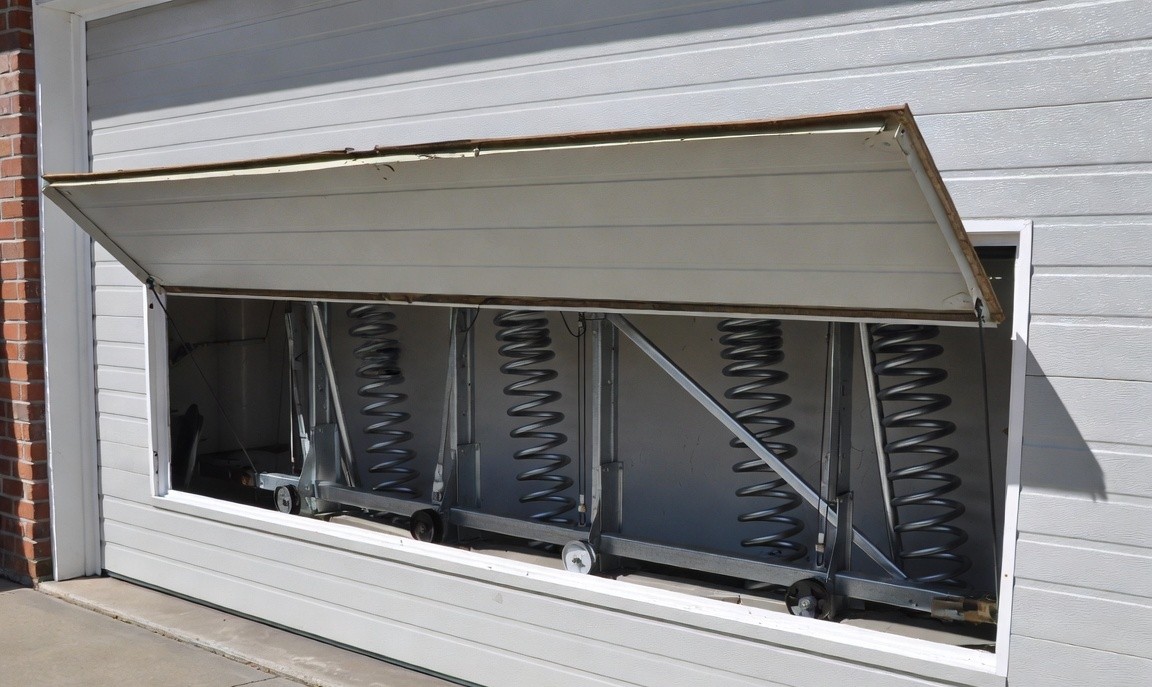
Garage door springs are the hardest-working component in the entire door system. Every time the door opens and closes, the springs absorb and release tension to counterbalance a door that can weigh anywhere from 150 to 300 pounds. They do it silently, automatically, and hundreds of times a year until one day they do not.
When a garage door spring fails, the door either will not open at all, reverses immediately when you try to close it, or drops suddenly with a sound loud enough to startle the entire neighborhood. Understanding the garage door spring lifespan, what shortens it, and when replacement is due helps Miami homeowners get ahead of that failure before it happens on a Monday morning.
How Garage Door Spring Lifespan Is Measured
Springs are not rated by years. They are rated by cycles. One cycle equals one complete open-and-close sequence. When the door goes up, that is half a cycle. When it comes back down, the cycle is complete.
Standard residential torsion springs are manufactured to a rating of 10,000 cycles. That is the baseline most builder-grade springs are shipped with from the factory. High-cycle springs are rated for 25,000 to 50,000 cycles and cost more upfront but last substantially longer.
To translate cycles into calendar time, the math depends on how often the door moves. A household that opens and closes the garage door four times a day runs through approximately 1,460 cycles per year. At that rate, a 10,000-cycle spring lasts roughly seven years. Six uses per day burns through the same spring in under five years. A household with teenagers, a shared driveway, or a garage used as the primary home entrance can easily exceed eight to ten cycles per day, which means standard springs may need replacement every three to four years.
This is why the question “how long do garage door springs last?” does not have a single answer. The lifespan of garage door springs is determined entirely by how many cycles the household generates, not by a fixed calendar.
| Spring Type | Cycle Rating | Estimated Lifespan (4 cycles/day) |
| Standard extension spring | 5,000 to 10,000 cycles | 3 to 7 years |
| Standard torsion spring | 10,000 to 15,000 cycles | 7 to 10 years |
| High-cycle torsion spring | 25,000 to 50,000 cycles | 15 to 20+ years |
Types of Garage Door Springs
Knowing which type of spring your door uses matters because the two main types have different lifespans, failure characteristics, and replacement costs.
Torsion Springs
Torsion springs mount horizontally on a steel shaft above the door opening. When the door closes, the spring winds up and stores energy. When the door opens, that stored energy releases and the spring unwinds, doing the mechanical work of lifting the door.
Because the force is distributed evenly along the coiled shaft rather than concentrated at two attachment points, torsion springs wear more slowly and fail more predictably than extension springs. They also fail in a more controlled way: when a torsion spring breaks, the door typically becomes very heavy and difficult to move, but it does not lurch or snap. Most residential homes with heavier double-car doors use torsion springs.
Standard torsion springs are rated for 10,000 to 15,000 cycles. High-cycle torsion springs, which use thicker wire and higher-grade steel, are rated for 25,000 to 50,000 cycles. In Miami, where many homeowners use the garage as the primary entry point to the home and cycle the door multiple times per day, high-cycle torsion springs are the practical long-term choice.
Extension Springs
Extension springs run along the horizontal tracks on each side of the door. They stretch out as the door closes and contract as the door opens, using their tension to assist with the lift. They are more common on older doors and lighter single-car configurations.
Extension springs generally have a shorter lifespan than torsion springs, rated at 5,000 to 10,000 cycles. They also fail less predictably. Because the spring is under full stretch tension when the door is closed, a break can release that energy suddenly and violently. Safety cables threaded through the center of each extension spring are required to contain a broken spring if this happens. Older systems that are missing those safety cables should be inspected by a technician immediately.
Torsion Bar (TorqueMaster) Springs
TorqueMaster springs are a proprietary torsion system from Wayne Dalton in which the spring is housed inside a hollow steel torsion bar rather than mounted on an exposed shaft. This enclosure makes the system safer because the spring cannot become a projectile if it breaks. Cycle ratings vary by model, and replacement typically requires a technician familiar with that specific system.
What Affects Garage Door Spring Lifespan
Cycle count determines the rated lifespan, but several factors can cut that lifespan short before the spring reaches its rated cycle total.
Lack of lubrication. Metal coils rubbing against each other without lubrication generate friction that accelerates wear at the molecular level, a process called metal fatigue. Springs that go years without lubrication fail significantly earlier than their cycle rating suggests. Applying a silicone-based lubricant or white lithium grease to the spring coils twice a year reduces friction, prevents surface rust, and extends the spring’s functional life.
Door imbalance. A door that is not properly balanced puts more strain on the springs than the design accounts for. When one side of the door is heavier or the tracks are misaligned, the springs on one side cycle under greater load. That accelerates wear unevenly and often results in one spring failing well ahead of its rated cycle count. A professional balance check once a year keeps the load distribution correct.
Humidity and salt air. In Miami, this factor is more significant than it is in most other parts of the country. High humidity accelerates surface oxidation on bare metal springs. Homes within a mile or two of the coast deal with salt air, which speeds that corrosion further. A spring that has developed visible rust is weakened at every corroded point, and those spots become likely failure sites regardless of cycle count. Lubrication that includes a corrosion inhibitor, applied consistently, is the most effective protection available in South Florida’s climate.
Door weight. Springs are sized to the specific weight of the door. A homeowner who replaces a lighter steel door with a heavier insulated or wood-look door without recalibrating the spring system is running springs under a load they were not designed to carry. That extra strain shortens lifespan measurably and puts the opener motor under unnecessary stress at the same time.
Temperature fluctuation. Extreme cold makes steel more brittle and more prone to sudden failure. Miami does not experience the deep cold that affects springs in northern climates, but temperature swings during winter cold fronts, from 80 degrees during the day to the mid-40s overnight, can stress springs that are already worn and near the end of their rated life.
Opener problems. A malfunctioning opener that jerks, shudders, or fails to disengage smoothly puts mechanical shock on the springs with every cycle. If your opener is struggling, getting it serviced promptly protects the springs from the secondary damage that rough operation causes.
Signs of a Broken Garage Door Spring
Some spring failures are unmistakable. Others show up gradually as performance problems before the spring breaks completely. Here is what to watch for.
A loud bang from the garage. This is the most dramatic sign, and it often happens when the door is not in use. A torsion spring under tension that breaks releases that energy instantly. The sound is similar to a gunshot. If you hear a sharp bang from the garage and the door suddenly will not open, a broken spring is almost certainly the cause.
The door will not open or is extremely heavy. When a spring breaks, the mechanical counterbalance it provided disappears. The opener motor alone cannot lift the full weight of the door. The door may not move at all, or it may lift a few inches and stop. If you disconnect the opener and try to lift manually, a door with a broken spring feels dramatically heavier than normal. It should feel nearly weightless when the springs are working correctly.
A visible gap in the spring coils. Torsion springs that have broken show a visible separation in the coil where the metal gave way. If you can see your spring from the garage interior, look for a gap of one to three inches in the coil. That gap means the spring is broken and the door should not be operated.
The door closes too fast or slams shut. Springs that have lost tension but have not broken completely can still allow the door to open, but the door drops faster than it should on the way down. A door that slams during closing is a safety hazard and a sign that the springs are no longer providing adequate counterbalancing force.
The door looks crooked or tilted. On systems with two torsion springs or two extension springs, one spring often fails before the other. When that happens, one side of the door has counterbalancing support and the other does not. The result is a door that hangs at an angle, rises unevenly, or tracks along one side faster than the other.
Visible rust, gaps in the coils, or a stretched-out spring. These are pre-failure warning signs that a spring is close to the end of its life. Rust weakens the metal structurally. Extension springs that look stretched or loose rather than taut have lost tension. Either condition warrants a service call before the spring breaks under load.
Garage Door Spring Maintenance: How to Extend Lifespan
A few simple maintenance habits make a measurable difference in how long garage door springs last.
Lubricate the springs twice a year. Apply a silicone-based spray lubricant or white lithium grease directly to the spring coils. Work the lubricant into the coils by cycling the door a few times after application. Do not use WD-40, which is a penetrating oil rather than a lubricant. It displaces moisture temporarily but does not provide lasting lubrication and can attract dust and debris that accelerate wear.
Do the balance test once a year. Disconnect the opener by pulling the emergency release cord. Lift the door manually to about waist height and let go. A properly balanced door stays in place. If it falls, the springs are losing tension and need adjustment. If it rises, there is too much tension. Either result means a service call is due. Running an imbalanced door stresses springs, cables, and the opener motor simultaneously.
Inspect visually every few months. Look at the springs when you are in the garage. Rust, visible gaps in the coils, unusual stretching on extension springs, and any asymmetry between two-spring systems are all worth noting and calling in for a professional assessment.
Schedule an annual professional tune-up. A licensed technician inspects spring condition and tension, checks cable wear, verifies roller and track alignment, and lubricates all hardware. The cost of a tune-up is a fraction of an emergency service call, and a technician can often spot a spring that is within a few hundred cycles of failure before it breaks.
Replace both springs simultaneously. When one spring fails, the other is typically close behind. Replacing only the broken spring leaves a worn spring doing the same job it was struggling with before the first failure. The labor cost for replacing two springs at the same time is only marginally higher than replacing one, but it avoids a second service call within a year or two.
Consider upgrading to high-cycle springs. If your household generates more than four to six cycles per day, upgrading from standard 10,000-cycle springs to high-cycle springs rated for 25,000 to 50,000 cycles at the time of replacement is a straightforward value decision. The spring cost difference is modest and the lifespan difference is significant.
When to Replace Garage Door Springs: A Miami Homeowner’s Checklist
Replace garage door springs when any of the following are true:
- The spring has snapped or shows a visible gap in the coils
- The door will not open or is too heavy for the opener to lift
- The door slams shut rather than descending in a controlled way
- The door hangs crooked or tracks unevenly during operation
- Visible rust covers a significant portion of the spring coils
- The springs are approaching or beyond their cycle rating based on your household usage
- One spring in a two-spring system has already been replaced
Do not attempt to operate the door if a spring is broken or visibly damaged. Running a door without proper spring tension burns out the opener motor and puts cables, rollers, and tracks under stress they are not designed to handle. It also creates a safety hazard for anyone near the door when it moves.
Why Spring Replacement Is Not a DIY Job
Garage door springs store enough mechanical energy to cause serious injury if they release suddenly during handling. Torsion springs must be wound and unwound with specialized steel winding bars. Extension springs must be handled with the door in a specific position and safety cables in place. No standard household toolkit includes the equipment needed to do this safely.
The professional cost of spring replacement in Miami typically runs $150 to $450 depending on spring type and whether one or both springs are being replaced. That cost covers the spring hardware, labor, a balance adjustment, and verification that the opener and cable system are functioning correctly after the new spring is installed. It is not a repair category where the DIY savings justify the risk.
Stay Ahead of the Failure
Garage door springs do not give much warning before they go. A coil that has been quietly accumulating metal fatigue for years can break overnight while the door sits closed. The best protection is knowing roughly where your springs are in their cycle life, keeping up with lubrication and balance checks, and scheduling a professional inspection if anything about the door’s behavior feels different from normal.
In Miami’s climate, adding consistent corrosion protection to that routine makes a measurable difference. A spring that might reach 10,000 cycles under ideal conditions may fall short of that in a coastal South Florida garage without regular lubrication and a good humidity-resistant coating on the coils.
Unity Windows & Doors serves Miami-Dade homeowners with professional door installation, repair, and maintenance. If your garage door springs are overdue for an inspection or you need a replacement, contact our team to schedule a visit.
Frequently Asked Questions
What is the average lifespan of garage door springs? Standard torsion springs last 10,000 to 15,000 cycles, which translates to roughly 7 to 10 years for a household using the door four times daily. Extension springs typically fall in the 5,000 to 10,000 cycle range, or 3 to 7 years. High-cycle springs rated for 25,000 to 50,000 cycles last 15 to 20 years under moderate use.
What are the types of garage door springs? The two main types are torsion springs, which mount horizontally above the door on a steel shaft, and extension springs, which run along the horizontal tracks on each side of the door. Torsion springs generally last longer and fail more predictably. TorqueMaster springs are a proprietary enclosed torsion system used by Wayne Dalton.
What are the signs of a broken garage door spring? The most common signs are a loud bang from the garage when the door is not in use, a door that will not open or feels extremely heavy, a visible gap in the torsion spring coils, a door that slams shut during closing, and a door that hangs at an angle or tracks unevenly.
How do I extend the lifespan of my garage door springs? Lubricate spring coils with silicone spray or white lithium grease twice a year, run a manual balance test annually, schedule a professional tune-up each year, and replace both springs simultaneously when one fails. In Miami, paying extra attention to corrosion from humidity and salt air is important.
Should I replace both springs when one breaks? Yes. When one spring fails, the other is typically near the end of its life as well. Replacing both at the same time costs marginally more in labor but avoids a second service call and prevents the added strain an asymmetrical spring system puts on the door and opener.
Are high-cycle springs worth the extra cost? For most Miami homeowners, yes. High-cycle springs cost $50 to $150 more than standard springs but last two to three times as long. For households cycling the door more than four times per day, the math favors high-cycle springs consistently.