
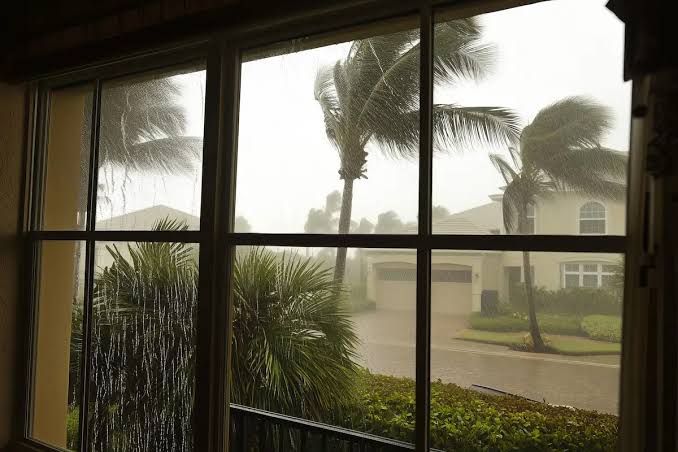
Impact windows can be one of the larger upgrades you make to a Florida home, so it is reasonable to ask whether the benefits justify the cost. If you already have hurricane shutters or your existing windows still operate properly, spending thousands of dollars to replace them may feel difficult to justify.
The decision becomes less obvious when you look beyond the purchase price. Your current hurricane protection, how much work storm preparation requires, the condition of your windows, insurance considerations, energy performance, and how long you expect to stay in the home can all change the value of the project.
That means the answer to “Are impact windows worth it in Florida?” is not automatically yes for every property. What matters is what you are replacing, what problems you want to solve, and whether the advantages you will use throughout the year are valuable enough to justify the investment.
The Biggest Value Is Permanent Hurricane Protection
For many Florida homeowners, the main reason to consider impact windows is straightforward: protection is already built into the window system.
Florida’s current building code defines wind-borne debris regions based on factors including design wind speeds and proximity to certain coastal conditions. In areas where opening protection is required, impact-resistant windows are one way to satisfy those requirements when the products and installation are appropriate for the project. Approved shutters and other protection systems may also be options.
The practical difference becomes clear before a storm.
If your home relies on removable panels, someone has to locate the panels, match them to the correct openings, carry them outside, and install them. Accordion and roll-down shutters reduce that work but still have to be deployed.
Properly installed impact windows provide permanent protection without adding that preparation step each time a hurricane threatens.
For homeowners who travel frequently, own a second home, have difficult upper-story openings, or simply do not want to install shutters before every storm, that convenience can be a major part of the value.

Existing Shutters Can Change the Financial Decision
Permanent protection is useful, but it does not mean every Florida homeowner should immediately replace functioning windows.
Suppose your windows are in good condition and every vulnerable opening already has a properly approved shutter system that you are comfortable using. In that situation, replacing the windows solely for hurricane protection may be harder to justify financially.
Your situation looks different if:
- The existing windows are approaching replacement age.
- Frames or seals are deteriorating.
- Windows are difficult to open or close.
- You dislike installing hurricane panels.
- Some openings are not adequately protected.
- You are already planning a major renovation.
- You want additional performance improvements from the new windows.
The fairest comparison is therefore not impact windows versus doing nothing.
It may be impact windows versus replacing old windows and continuing to maintain shutters. Or it may be impact windows versus buying a new shutter system for windows that still have years of useful service remaining.
Those are very different calculations.
Insurance Savings Can Help, but Do Not Base the Purchase on Them
Insurance is one of the most frequently mentioned financial benefits of impact windows, but it is also one of the easiest to oversimplify.
Florida insurers may offer wind-mitigation credits for documented hurricane-resistance features. Citizens Property Insurance, for example, currently includes qualifying impact-resistant windows and doors among the opening-protection features that can contribute to wind-mitigation discounts. Documentation through a qualifying wind-mitigation inspection is required.
However, installing a few impact windows does not mean you automatically receive a particular discount.
Opening protection can involve the entire building envelope. Citizens’ current guidance states that qualifying opening-protection classifications consider exterior openings such as windows, doors, sliding glass doors, skylights, and garage doors. Its 2026 wind-loss mitigation guidance also evaluates the weakest form of protection present on the structure.
That distinction matters if you replace every window but leave another opening without qualifying protection.
Before including insurance savings in your return-on-investment calculation, ask your insurance agent what improvements would affect your specific policy and what documentation will be required.
Energy Performance Depends on the Window You Choose
Replacing older windows can also provide an opportunity to improve energy performance, particularly in Florida’s cooling-dominated climate.
But impact resistant and energy efficient do not mean exactly the same thing.
The U.S. Department of Energy notes that windows have a significant effect on building energy use. ENERGY STAR recommends paying particular attention to the Solar Heat Gain Coefficient, or SHGC, in hot climates. A lower SHGC means less solar heat passes through the window, which can reduce cooling demand.
That means you should compare actual performance ratings when shopping rather than assuming every impact window will produce the same energy savings.
Look at factors such as:
- SHGC
- U-factor
- Low-E coatings
- Insulated versus non-insulated glass
- Frame construction
- Air leakage performance
ENERGY STAR’s current Southern Climate Zone criteria, for example, emphasize low SHGC values because reducing solar heat gain is particularly important in hot climates.
If your existing windows are older, poorly sealed, or allow substantial solar heat into the house, upgrading to a well-selected impact window may provide benefits beyond hurricane protection. If you already have relatively efficient windows, the difference may be smaller.
Everyday Convenience Can Matter More Than the Payback Calculation
Not every benefit has to appear on an electric bill or insurance statement to have value.
One of the reasons homeowners choose impact windows is that hurricane protection becomes part of the house rather than another task on the storm-preparation checklist.
There are also potential everyday benefits depending on the window system selected. Laminated glazing and tighter modern window assemblies may improve resistance to forced entry and reduce some outside noise, although actual performance varies by product and should be compared using manufacturer specifications rather than assumed.
You may also simply want windows that operate better, look newer, require less storm preparation, and eliminate permanent exterior shutters from the appearance of the home.
Those benefits are difficult to assign a universal dollar amount to, but they can still affect whether the project feels worthwhile after installation.
Impact Windows May Make More Sense When You Already Need Replacement
Timing can make a major difference in the value equation.
If several windows are already leaking, corroding, difficult to operate, or otherwise due for replacement, part of your budget would need to be spent on windows regardless.
At that point, the relevant question becomes how much more you are paying to move from an ordinary replacement option to an approved impact-resistant system that provides permanent hurricane protection.
The same logic can apply during:
- Major home renovations
- Exterior remodeling
- Window opening changes
- Additions
- Whole-house efficiency improvements
Combining projects can sometimes make more sense than replacing perfectly functional windows solely to gain one benefit.
When Impact Windows May Not Be the Best Use of Your Budget
Impact windows have meaningful advantages, but they are not automatically the first improvement every Florida property needs.
If your windows are relatively new, you already have complete approved hurricane protection, and installing shutters is easy for your household, the financial case for immediate replacement may be weaker.
You may also have other vulnerabilities that deserve attention first. Roof condition, roof-to-wall connections, garage doors, exterior doors, drainage issues, and other building components can influence how a home performs during severe weather.
A window salesperson can evaluate windows. They should not be treated as the professional responsible for evaluating every structural component of your house.
Think about the property as a whole and decide where the next dollar produces the most useful improvement.
Compare the Complete Window System, Not Just the Glass
If you decide impact windows are worth considering, product selection and installation matter as much as the decision to buy them.
An impact window is a system. The glass, frame, glazing attachment, anchors, mullions, fasteners, and connection to the structure have to work together within the product’s approved configuration.
That is why simply putting impact glass into an ordinary window frame does not create the equivalent of an approved impact-window assembly.
Before accepting a proposal, ask for:
- The manufacturer and product series
- Applicable Florida Product Approval or Miami-Dade NOA
- Design-pressure information for the proposed openings
- Glass and energy-performance specifications
- Permit responsibility
- Installation and finishing scope
- Product warranty
- Workmanship warranty
Unity Windows & Doors specifically advises customers to evaluate the complete approved window or door system rather than treating impact glass alone as hurricane protection.
So, Are Impact Windows Worth It in Florida?
For many homeowners, they can be, particularly when older windows already need replacement or when permanent hurricane protection would eliminate a difficult shutter routine.
The value becomes less certain when relatively new windows are already protected by an effective shutter system and the homeowner is considering replacement solely for hurricane protection.
Instead of asking whether impact windows are universally “worth it,” look at what you are gaining compared with what your home has today. Consider storm preparation, window condition, energy performance, insurance eligibility, other vulnerable openings, and how long you expect to benefit from the upgrade.
If you are considering replacement, Unity Windows & Doors can evaluate your existing openings and discuss impact-window options based on your home, location, and project requirements.
Frequently Asked Questions About Whether Impact Windows Are Worth It in Florida
How long do impact windows last?
Service life depends on the manufacturer, frame material, exposure, installation quality, maintenance, and operating conditions. Rather than relying on a universal lifespan, review the manufacturer’s warranty and maintenance requirements for the specific window system you are considering.
Are impact windows better than hurricane shutters?
Neither option is automatically better for every homeowner. Shutters can provide effective opening protection at a lower initial cost, while impact windows provide permanent protection without requiring deployment before each storm. Your existing windows, budget, and storm-preparation preferences should guide the decision.
Are impact windows required everywhere in Florida?
No. Requirements vary based on factors including location, building type, project scope, design wind speed, and whether the property is in a wind-borne debris region or the High-Velocity Hurricane Zone. Impact windows are also not the only possible method of approved opening protection.
Can impact windows lower homeowners insurance in Florida?
Qualifying impact protection may contribute to wind-mitigation discounts, but savings are not automatic. Insurers typically require documentation, and the protection present on other exterior openings may affect the classification. Ask your insurance agent about your specific property before estimating savings.
Do I still need shutters if I have impact windows?
An appropriately approved and installed impact-window system generally provides impact protection for that opening without an additional shutter. Other non-impact openings may still require protection.
Do impact windows make a home more energy efficient?
They can, but impact resistance alone does not determine energy performance. Compare the window’s SHGC, U-factor, Low-E coatings, glass configuration, and air-leakage characteristics. In Florida’s hot climate, lower solar heat gain can be particularly useful.
Are impact windows worth it if I already have accordion shutters?
Possibly, but the case is more dependent on your priorities. If your existing windows and shutters are in good condition and easy to use, replacement may not be urgent. Impact windows may become more attractive if the windows themselves need replacement or you want permanent protection without deploying shutters.
Can I install impact windows in phases?
Often, yes, depending on the project and local permitting requirements. However, replacing only some windows does not automatically mean the entire home qualifies for a particular opening-protection insurance classification. Plan how the remaining openings will continue to be protected.
Will impact windows increase my home’s resale value?
They may make a Florida property more attractive to buyers who value hurricane protection and reduced storm preparation, but there is no universal dollar-for-dollar increase in resale value. Market conditions, property condition, location, and the quality of the installation all matter.
Is impact glass the same as an impact window?
No. An approved impact window consists of the complete assembly, including the glass, frame, glazing system, anchoring, and installation configuration. Replacing standard glass with laminated impact glass alone does not necessarily create an approved hurricane-resistant window system.
What should I check before buying impact windows?
Confirm the product approval, allowable sizes and configurations, design pressures, energy ratings, installation scope, permit responsibility, warranties, and how the proposed windows fit into the hurricane protection plan for the entire home.