
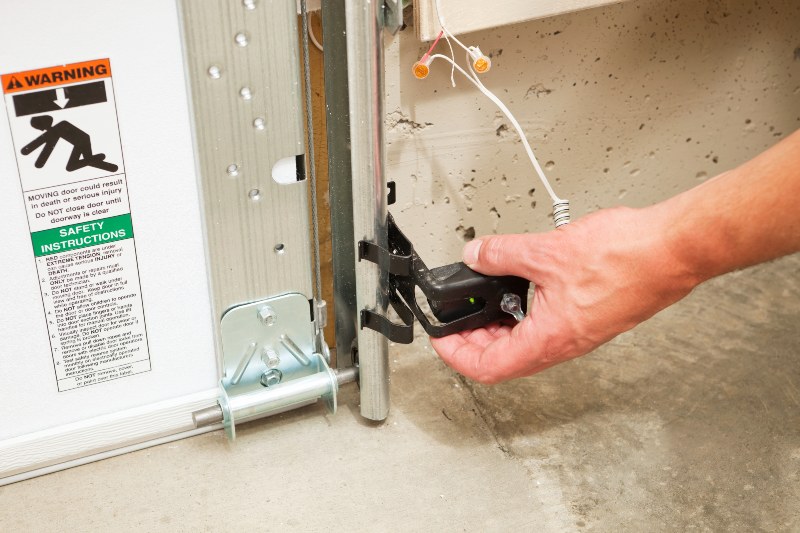
If your garage door refuses to close, reverses on its own, or only works when you hold down the wall button, a faulty sensor is almost always the reason. The good news: most garage door sensor problems are DIY-friendly and take less than 30 minutes to fix.
This guide walks Miami homeowners through how to fix a garage door sensor from start to finish, covering cleaning, alignment, wiring, bypassing, and when to call a professional.
What Is a Garage Door Sensor and How Does It Work?
Garage door sensors (also called photo eye sensors) are two small devices mounted on either side of your garage door, about 4 to 6 inches off the ground. One sensor sends an invisible infrared beam across the doorway; the other receives it. When something breaks that beam, the opener automatically stops or reverses the door to prevent accidents.
Under federal safety standards, all garage door openers manufactured after 1993 are required to have these sensors. Brands like LiftMaster, Chamberlain, and Genie all use the same basic infrared technology.
In Miami’s humid, coastal climate, sensors face additional stress from salt air, humidity, and intense sunlight, all of which can cause faster wear, lens fogging, and alignment drift.
Why Won’t My Garage Door Close? Common Sensor Problems
Before jumping into repairs, it helps to know what you’re dealing with. Here are the most frequent causes:
Dirt or debris on the lens. Dust, spider webs, dead leaves, and grime are the number one cause of sensor failure. A blocked lens breaks the beam even if nothing is physically in the doorway.
Misaligned sensors. A bumped bracket, a car scraping by, or even vibration from daily use can knock sensors out of alignment. When the beam isn’t lined up, the opener reads it as an obstruction.
Loose or damaged wiring. Frayed insulation, corroded terminals, or a wire that has come loose from the terminal block cuts power to one or both sensors.
Sunlight interference. Direct sunlight hitting the receiving sensor can overwhelm the infrared signal, especially during Miami’s long, bright afternoons. This is a common and often overlooked cause.
Internal sensor failure. When power is confirmed and alignment is correct but the sensor light remains off, the internal circuit has likely failed and the sensor needs replacing.
How to Fix a Garage Door Sensor: Step-by-Step
Step 1: Check for Obstructions
Start with the simplest fix. Walk the full length of both sensor brackets and look for anything blocking the beam path: a trash can, a garden hose, a child’s toy, or even a buildup of leaves near the floor. Clear the path and test the door.
Step 2: Clean the Sensor Lenses
Wipe both lenses with a clean, dry cloth. For stubborn grime, use a mild household cleaner on the cloth. Do not spray liquid directly onto the sensor. After cleaning, check whether the indicator lights return to solid (not blinking). This alone resolves a large percentage of sensor calls.
Step 3: How to Align Garage Door Sensors
Misalignment is the second most common cause of sensor failure. Each sensor has a small LED indicator light. When properly aligned:
- The sending sensor (usually yellow) should show a solid light.
- The receiving sensor (usually green) should also show a solid, steady light.
If one light is off or flickering, the sensors are out of alignment. Here is how to fix it:
- Loosen the wing nut or bracket screw on the misaligned sensor slightly so it can move.
- Gently pivot or tilt the sensor until the indicator light turns solid.
- Re-tighten the screw or wing nut firmly so the sensor holds position.
- Test the door using your remote or wall button.
If both sensors are loose, realign the sending sensor first, then adjust the receiving sensor until both lights are solid.
Step 4: Check and Fix the Wiring
Power issues are the third most common culprit. With the garage door opener unplugged:
- Inspect the low-voltage wires running from each sensor up to the opener motor head.
- Look for frayed insulation, visible breaks, pinched spots, or corrosion at the terminals.
- If a wire has come loose, re-seat it firmly into the terminal block on the back of the opener.
- If you find a frayed or cut section, strip the damaged portion, reconnect the good wire ends, and secure them with wire connectors or electrical tape.
- Plug the opener back in and check whether both sensor lights illuminate.
If you are not comfortable doing basic wiring work, stop here and call a licensed technician.
Step 5: Reset the Opener
Sometimes the opener’s logic board gets confused by a power surge or electrical glitch. Unplug the opener from the outlet, wait 30 seconds, and plug it back in. This clears stored error states and can restore normal sensor function without any physical repair.
Step 6: Address Sunlight Interference
If your sensors fail only during certain times of day, direct sunlight is likely the cause. Temporary fixes include:
- Attaching a short section of cardboard tube or a PVC pipe cap over the receiving sensor lens to shade it.
- Repositioning the sensor slightly downward so it does not catch direct sun.
A technician can also install a sun shield or relocate the sensors if the problem is chronic.
Step 7: Replace the Sensor
If you have cleaned the lenses, corrected alignment, fixed the wiring, and reset the opener and the door still will not close normally, the sensor itself has likely failed internally. Replacement sensors are available at most home improvement stores and cost between $20 and $50. Make sure the replacement matches your opener brand. Installation follows the same wiring steps as above.
How to Bypass Garage Door Sensors (Temporarily)
Important safety note: Bypassing or disabling garage door sensors removes a critical safety feature. The door will no longer stop for people, pets, or objects in its path. Only use these methods temporarily and with extreme caution.
How to Bypass Garage Door Sensors Using the Wall Button
Most garage door openers allow you to override the sensors by holding down the wall-mounted button continuously until the door fully closes. The opener interprets this as a manual command. Release the button and the door stops.
This method does not permanently disable anything; it simply allows one closing cycle while you troubleshoot.
How to Override Garage Door Sensors (Disconnect Method)
Some openers have a bypass or “force close” mode accessible through the opener settings. Refer to your owner’s manual for the specific steps for your brand (LiftMaster, Chamberlain, Genie, etc.).
Alternatively, you can disconnect the sensor wires from the terminal block on the opener. This will allow the door to close freely but will also trigger a warning light or beeping on most modern openers. Reconnect the sensors as soon as repairs are complete.
How to Disable Garage Door Sensors (Wiring Disconnect)
To fully disable the sensors, disconnect the white and white/black wires from the sensor terminals on the opener. Most newer openers will prevent normal remote operation in this state. Again, this should only be done as a short-term diagnostic step, never as a permanent solution.
Miami-Specific Sensor Tips
Miami’s environment creates sensor problems that homeowners in other climates rarely see:
Humidity and condensation. South Florida’s high humidity causes lens fogging and accelerates corrosion on wire terminals. Inspect sensor connections at least twice a year.
Salt air corrosion. Homes within a few miles of the coast deal with salt air that corrodes metal brackets and terminal connectors faster than average. Use stainless steel hardware where possible and apply a light coat of dielectric grease to wire terminals.
Sun angle. Miami’s southern latitude means strong afternoon sun hits west-facing garages at low angles during certain seasons, directly interfering with the receiving sensor beam.
Hurricane season prep. Before storm season, verify sensor alignment and bracket tightness. High winds and vibration from storm shutters can knock sensors out of position.
When to Call a Professional in Miami, FL
DIY fixes handle most sensor problems. Call a licensed garage door technician when:
- You have replaced the sensor and the problem persists.
- Wiring damage is extensive or runs inside the wall.
- The opener motor head itself shows signs of damage.
- The door is physically off-track or a spring has broken.
- You are not comfortable working with wiring or mechanical components.
Attempting repairs beyond your skill level on a system with heavy springs and moving parts can result in serious injury.
Keep Your Garage Door Sensor Working in Miami
Fixing a garage door sensor is one of the more manageable home repairs a Miami homeowner can tackle. In most cases, you are dealing with one of four problems: a dirty lens, an out-of-alignment bracket, a loose wire, or afternoon sunlight washing out the receiver. Running through the steps in this guide in order catches and resolves the problem the vast majority of the time without paying for a service call.
That said, Miami’s climate adds wear factors most guides do not account for. Salt air corrodes terminals. High humidity fogs lenses faster. Strong seasonal sun hits west-facing garages at angles that reliably knock sensors offline for hours a day. Building a simple maintenance habit around those factors, wiping lenses monthly, checking terminal connections every few months, and shading the receiving sensor if sunlight is a recurring issue, will cut down on repeat problems significantly.
If you have worked through every step here and the door still will not close, replace the sensor unit before assuming the opener itself is to blame. Sensors are inexpensive and the swap is straightforward. A new sensor resolves the issue in the majority of cases where DIY alignment and cleaning did not.
When the problem goes beyond the sensor, whether it is a damaged opener board, broken springs, or wiring inside the wall, stop and bring in a licensed technician. Garage door systems carry serious mechanical force, and repairs that go past basic sensor work carry a real injury risk without the right training and tools.
Need professional help with your home exterior in Miami-Dade? Unity Windows & Doors works with Miami homeowners on impact windows, doors, and exterior upgrades built for South Florida conditions. Contact our team to get started.
Frequently Asked Questions
How do I know if my garage door sensor is bad? The clearest signs are a blinking or off indicator light, a door that reverses before hitting the ground, or a door that only closes when you hold down the wall button. If cleaning and alignment do not fix those symptoms, the sensor has likely failed internally.
How do I align garage door sensors? Loosen the bracket screw on the misaligned sensor, pivot the sensor until its indicator light turns solid, then retighten the screw. Both sensors must show solid lights for the door to close normally.
How do I bypass garage door sensors safely? Hold the wall-mounted button continuously until the door closes. This is the safest temporary bypass method because it requires constant human presence. Never permanently disable sensors.
Why won’t my garage door close even after I clean the sensors? Sunlight interference, a misaligned bracket, loose wiring at the opener terminal, or a failed sensor circuit are the next things to check in that order.
How do I disable garage door sensors permanently? Disconnecting the sensor wires from the opener terminal will disable them, but it is not recommended. Most newer openers will restrict remote operation when sensors are disconnected, and you lose a federally required safety feature.
How often should I clean my garage door sensors in Miami? Given Miami’s dust, humidity, and pollen levels, a monthly lens wipe-down and a quarterly wiring inspection keep sensors running reliably.